
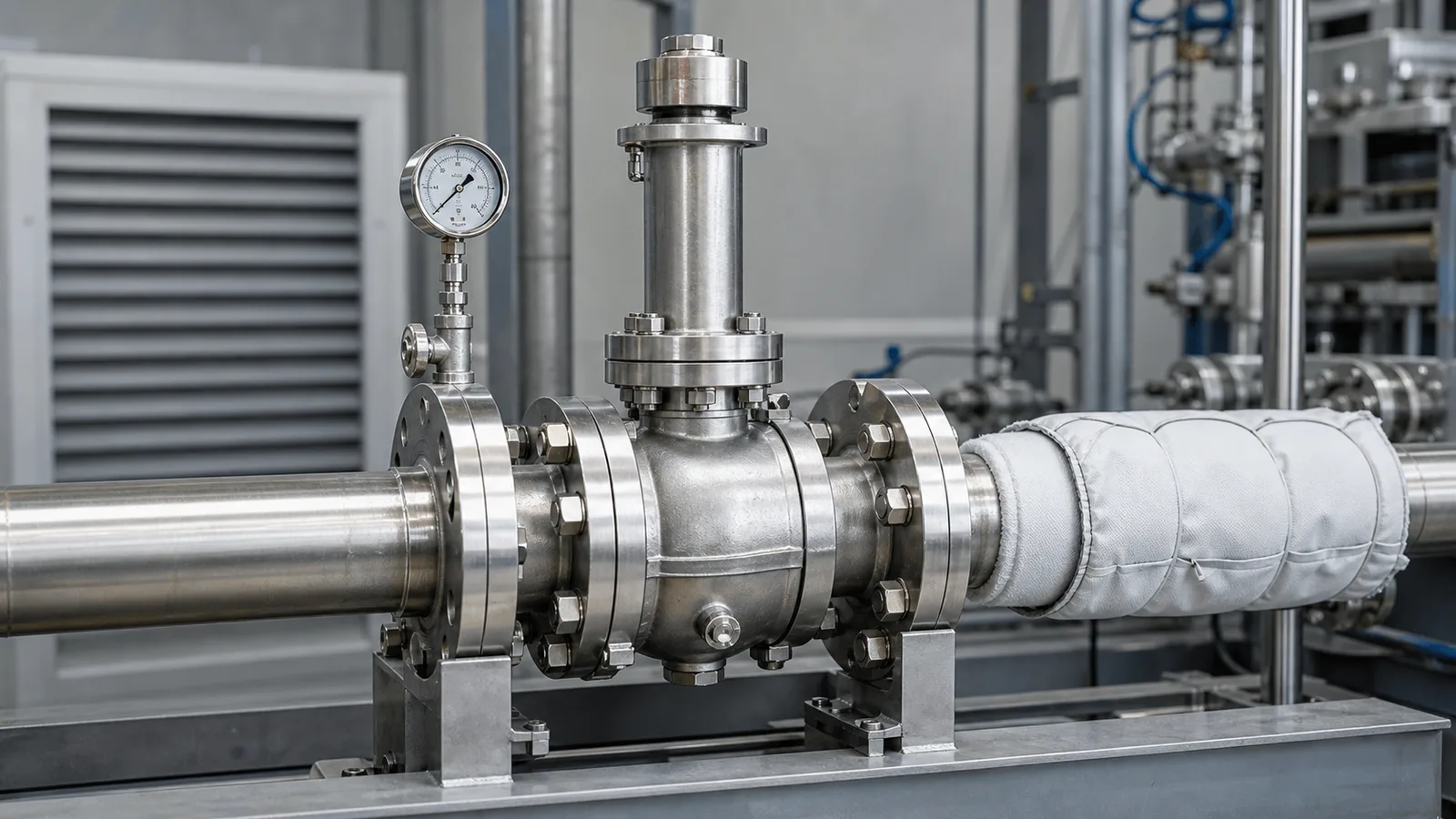
Low-temperature and LNG systems place special demands on valves. Standard valve designs may lose sealing performance, become difficult to operate, or suffer from material stress when exposed to cryogenic service. A cryogenic ball valve is designed to handle these conditions while maintaining reliable isolation and flow control.
For engineers and buyers, understanding the design features of cryogenic valves helps reduce leakage risk, improve safety, and avoid incorrect specifications in low-temperature pipeline projects.
What Is a Cryogenic Ball Valve?
A cryogenic ball valve is a ball valve designed for very low operating temperatures. It is commonly used in LNG, liquid nitrogen, oxygen service, chemical processing, and other low-temperature applications.
The most visible feature is often an extended bonnet or extended stem. This structure keeps the stem packing area away from the coldest zone and helps maintain sealing performance during operation.
XIAOVALVE provides a dedicated cryogenic ball valve option for low-temperature industrial service.
Why Standard Ball Valves May Not Be Enough
At low temperatures, metals contract and non-metallic sealing materials can become harder or less flexible. These changes can affect seat contact, stem sealing, operating torque, and overall leakage performance.
A valve selected only by size and pressure class may not perform safely in cryogenic service. The valve must be designed with suitable materials, sealing structure, stem extension, and testing requirements.
Key Design Features
The extended bonnet is one of the most important features. It helps protect the stem packing from direct exposure to extremely low temperatures and makes operation more stable.
Material selection is also critical. Stainless steel and other low-temperature compatible materials are often used because they can maintain toughness under cold conditions.
Seat design must be matched to the service. Some applications can use engineered soft seats, while severe conditions may require a metal seated ball valve approach or special sealing materials.
Where Cryogenic Ball Valves Are Used
Cryogenic ball valves are used in LNG loading stations, storage tanks, transport systems, air separation units, low-temperature chemical lines, and industrial gas facilities. They are often installed where reliable shut-off is required under cold and high-risk operating conditions.
For higher pressure or larger size applications, buyers may also compare trunnion-mounted options such as cast trunnion ball valves or forged trunnion mounted ball valves.
Specification Points for Buyers
Before ordering a cryogenic ball valve, confirm the minimum operating temperature, pressure class, valve size, connection standard, body material, seat material, stem extension length, operation method, and applicable test standard.
It is also important to confirm whether the valve will be installed vertically or horizontally, whether fire-safe design is required, and whether the media creates oxygen-cleaning or special handling requirements.
Testing and Quality Control
Cryogenic valves should be tested according to the project and service requirements. Testing may include shell testing, seat leakage testing, low-temperature testing, dimensional inspection, and material verification.
For project support, buyers can review XIAOVALVE’s quality control process or contact the team through the contact page.
Conclusion
Cryogenic ball valves are built for applications where low temperature can affect sealing, material behavior, and valve operation. The right extended bonnet design, material selection, and seat structure help maintain reliable shut-off in LNG and other cold-service systems.
For low-temperature pipeline projects, valve selection should be based on full working conditions rather than size and pressure alone. Correct specification helps improve safety, reduce leakage risk, and support long-term system reliability.
Recent Comments