
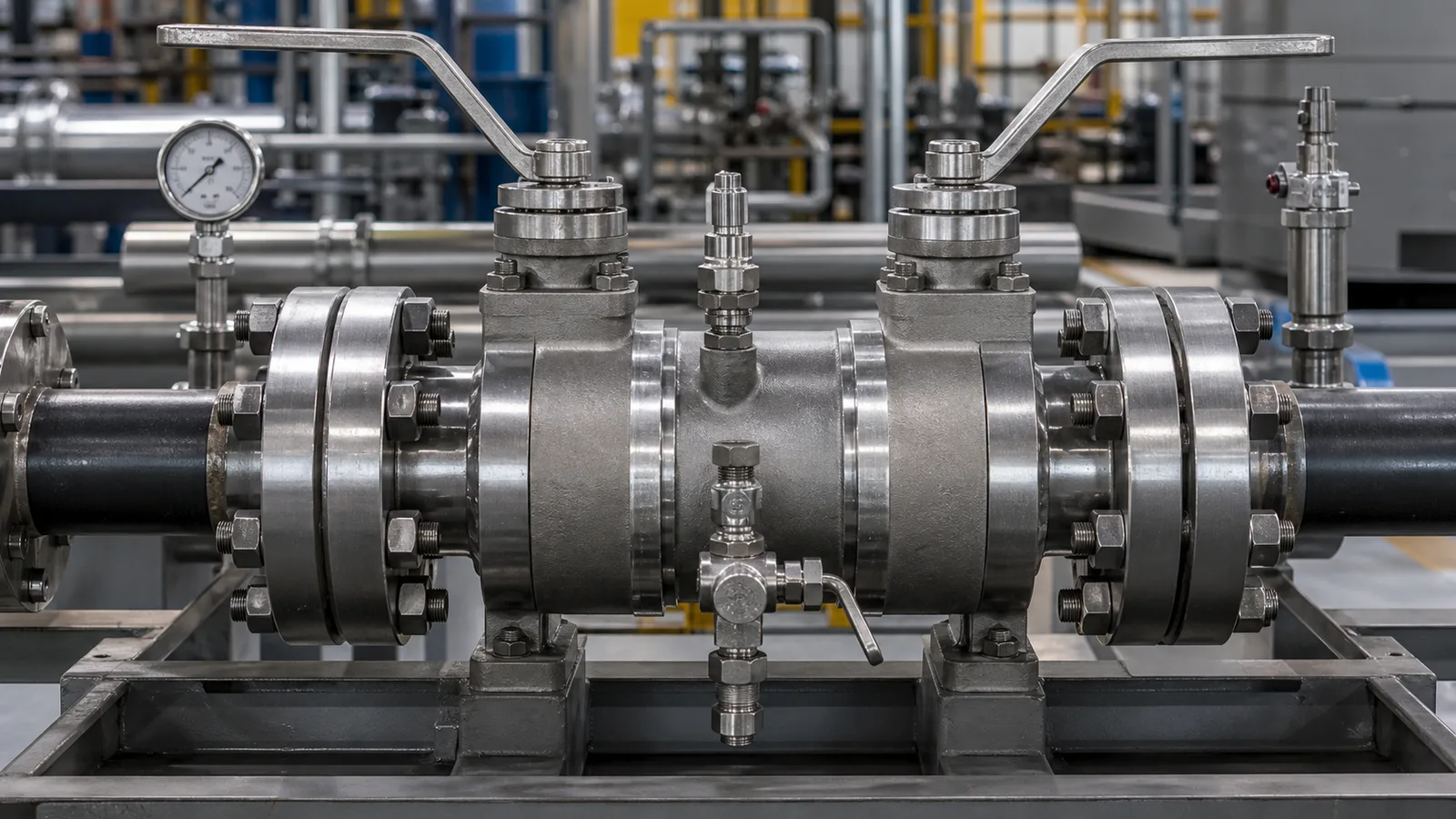
In oil and gas, petrochemical, and high-pressure pipeline systems, safe isolation is not only about closing a valve. Operators also need a reliable way to verify that pressure has been blocked and safely released before maintenance begins. This is where a double block and bleed ball valve becomes valuable.
A DBB ball valve combines two sealing barriers with a bleed function between them. This design helps reduce leakage risk, improve maintenance safety, and simplify pipeline isolation in compact installations.
What Is a DBB Ball Valve?
A DBB ball valve is designed to provide two independent shut-off points and a bleed port between them. When both sealing points are closed, the cavity between them can be vented or drained. This helps confirm isolation and release trapped pressure.
For systems that need compact, reliable isolation, a DBB ball valve can often replace multiple separate valves, fittings, and pipe connections.
Why Pipeline Isolation Needs a Bleed Function
In a standard isolation arrangement, closing one valve may not be enough to confirm that downstream equipment is safe to open. Seat leakage, pressure trapped in the cavity, or thermal expansion can create risk during maintenance.
The bleed function gives operators a controlled way to release pressure between the two sealing points. If pressure continues to build or fluid continues to escape, it may indicate that one sealing barrier is not fully tight.
Main Advantages of DBB Ball Valves
The first advantage is space saving. A compact DBB valve can reduce the number of components in the pipeline, which helps simplify installation and reduce potential leak paths.
The second advantage is safer maintenance. With double isolation and a bleed port, maintenance teams can verify pressure release before working on downstream equipment.
The third advantage is improved leak control. Fewer flange joints and threaded connections can reduce external leakage risk, especially in oil and gas service.
The fourth advantage is operating efficiency. A DBB valve can make isolation procedures faster and easier than using several separate valves in sequence.
Where DBB Ball Valves Are Commonly Used
DBB ball valves are commonly used in oil and gas pipelines, metering skids, chemical processing lines, storage terminals, offshore platforms, and high-pressure fuel systems. They are especially useful where operators need to isolate instrumentation, sampling lines, or process equipment.
For compact threaded or socket weld connections, buyers may also review NPT and SW ball valves. For flanged pipeline isolation, a flanged ball valve arrangement may be more suitable.
Material and Seat Selection
DBB valve selection should consider pressure class, temperature, media, corrosion risk, and operation frequency. Carbon steel is common for many oil and gas applications, while stainless steel may be selected for corrosive service.
Seat selection also matters. Soft seats are suitable for many clean service conditions, while metal seats may be needed for high temperature, dirty media, or abrasive service. For severe conditions, a metal seated ball valve design should be considered early in the specification process.
How to Specify a DBB Ball Valve
Before ordering, confirm the valve size, pressure class, connection type, body material, seat material, operation method, testing standard, and bleed connection requirements. It is also useful to confirm whether the application needs fire-safe design, anti-static structure, or special coating.
For high-pressure or project-specific applications, a direct review with a valve manufacturer can help avoid mismatched specifications. XIAOVALVE can support industrial ball valve selection through the contact page.
Conclusion
A DBB ball valve helps improve pipeline isolation by combining two sealing barriers with a controlled bleed function. For oil and gas, chemical, and high-pressure process systems, this design can improve safety, reduce leakage points, and simplify maintenance procedures.
When selecting a DBB valve, review the complete working conditions rather than choosing only by size and pressure rating. The right material, seat design, and connection type will help the valve perform reliably in real field service.
Recent Comments