
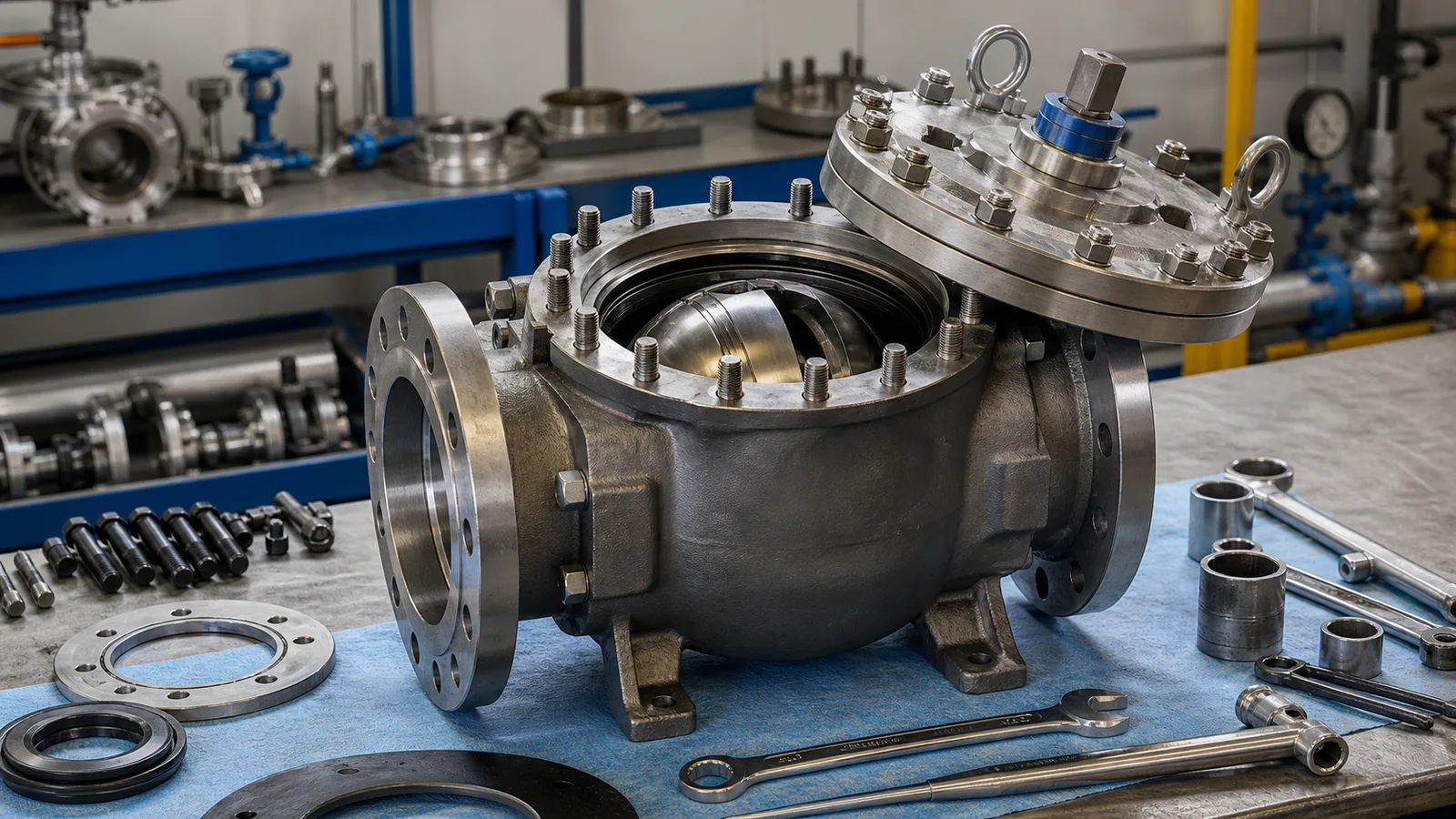
Pipeline shutdowns are expensive. In oil, gas, chemical, and power systems, every hour of downtime can affect production schedules, maintenance costs, and site safety. For this reason, many engineers choose top entry ball valves where inline maintenance and reliable isolation are important.
A top entry ball valve is designed so key internal parts can be accessed from the top of the valve body. This makes inspection, seat replacement, and repair easier without removing the entire valve from the pipeline.
What Is a Top Entry Ball Valve?
A top entry ball valve has a removable top cover that gives maintenance teams access to the ball, seats, stem, and internal sealing parts. Unlike some side entry designs, the valve body can often remain installed in the pipeline during service.
For plants where access is limited or shutdown windows are short, a top entry ball valve can reduce the time needed for inspection and repair.
How Top Entry Design Reduces Downtime
The main advantage is inline maintenance. Instead of cutting pipe, removing heavy valve assemblies, or disturbing nearby equipment, technicians can open the top cover and inspect the internal components directly.
This helps reduce disassembly work, crane time, flange gasket replacement, and alignment checks. It can also reduce the risk of introducing new leakage points after maintenance.
Where Top Entry Ball Valves Are Used
Top entry ball valves are common in oil and gas pipelines, refinery units, chemical plants, compressor stations, power plants, and high-value process lines. They are especially useful in systems where valve removal is difficult or downtime is costly.
For large sizes or high-pressure service, a trunnion-mounted design is often selected. XIAOVALVE also provides top entry cast trunnion ball valves and forged top entry trunnion ball valves for demanding pipeline conditions.
Maintenance Benefits for Operators
Top entry construction can make routine inspection more practical. Maintenance teams can check seat condition, sealing surfaces, stem packing, and internal wear without removing the valve body from the line.
For critical services, this can help operators build a better preventive maintenance plan. Faster inspection also supports better decision-making before a shutdown becomes an emergency.
Seat and Material Selection Still Matter
The top entry structure improves access, but performance still depends on correct material and seat selection. Clean service may use soft seats, while high temperature, abrasive media, or severe operating conditions may require a metal seated ball valve design.
Body material should also match the pressure, temperature, and corrosion conditions. Carbon steel, stainless steel, and forged steel options each have different advantages depending on the application.
How to Specify a Top Entry Ball Valve
Before purchasing, confirm the valve size, pressure class, connection standard, body material, trim material, seat type, operating temperature, media, and maintenance requirements. If the valve will be used in oil and gas service, also review testing standards, fire-safe design, and anti-static structure.
For project-specific selection, buyers can compare options through XIAOVALVE’s ball valve product range or contact the engineering team through the contact page.
Conclusion
Top entry ball valves are built for systems where maintenance access matters. By allowing inline inspection and repair, they can reduce downtime, simplify service work, and support reliable pipeline operation.
When downtime is costly, the valve structure should be part of the selection strategy. A well-specified top entry ball valve can help operators maintain performance while keeping service interruptions under control.
Recent Comments