
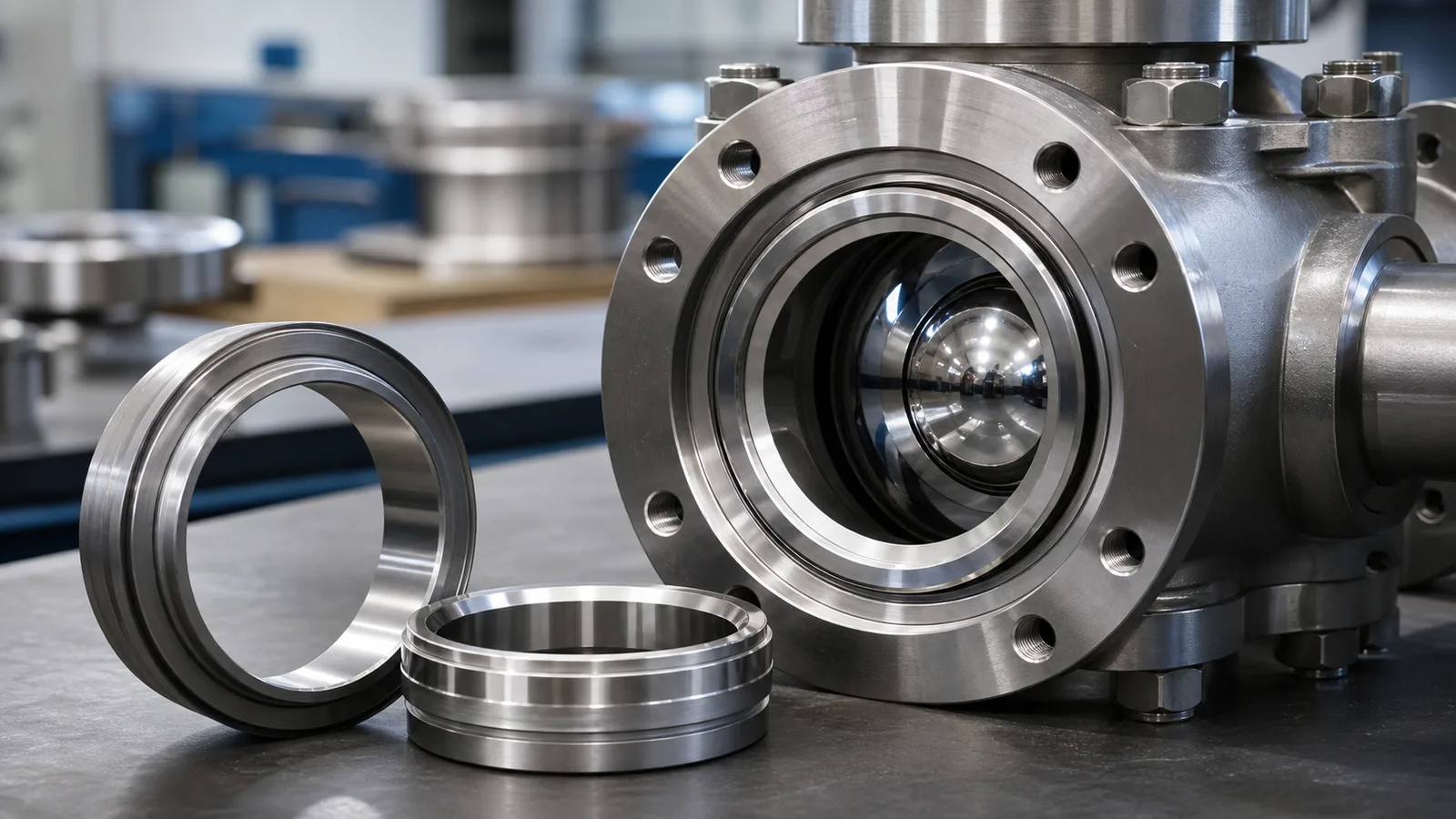
Choosing the right ball valve seat is one of the most important decisions when selecting a valve for high-pressure, high-temperature, or demanding industrial service. The valve body may carry the pressure, but the seat is what determines sealing performance, operating torque, wear resistance, and long-term reliability.
For buyers, engineers, and project teams, understanding seat selection helps avoid leakage, premature failure, and unnecessary maintenance costs.
What Does a Ball Valve Seat Do?
The ball valve seat forms the sealing surface between the ball and the valve body. When the valve is closed, the seat presses against the ball to stop flow. When the valve opens, the ball rotates while the seat continues to support sealing and alignment.
In standard applications, soft seats are often enough. In severe service, such as high temperature, abrasive media, or frequent cycling, a metal seated ball valve may be the better choice.
Soft Seat vs. Metal Seat
Soft seats are commonly made from PTFE, RPTFE, PEEK, or other engineered polymers. They offer excellent sealing performance and relatively low operating torque. This makes them suitable for clean fluids, gas service, water systems, and many general industrial pipelines.
Metal seats are designed for tougher conditions. They are often used where soft materials may deform, wear, or lose sealing ability. Applications include high-temperature steam, abrasive slurry, oil and gas pipelines, and other severe service conditions.
If your application involves heat, particles, pressure shock, or frequent operation, reviewing a metal seated ball valve design early can reduce risk.
Key Factors in Seat Selection
The first factor is temperature. PTFE seats perform well in many standard applications, but high-temperature service may require PEEK, reinforced materials, or metal seats.
The second factor is pressure. Higher pressure creates greater load on the seat. For larger sizes and higher pressure classes, a trunnion mounted ball valve can provide better ball support and more stable sealing.
The third factor is the media. Clean gas and clean liquid are easier to seal. Abrasive particles, corrosive chemicals, and dirty process fluids require more careful material selection.
The fourth factor is operation frequency. A valve that opens and closes often needs a seat design with strong wear resistance. This is especially important for process plants, oil terminals, and high-cycle isolation systems.
Why Seat Design Matters for Leakage Control
Seat material is important, but seat structure matters too. A good seat design helps maintain contact pressure, compensate for pressure changes, and protect the sealing surface during operation.
For isolation service, especially in oil and gas systems, many buyers also evaluate DBB ball valves because double block and bleed designs help improve safety during maintenance and pipeline isolation.
Matching Seat Type to Valve Structure
Floating ball valves are often used in smaller sizes and moderate pressure conditions. The ball is pushed against the downstream seat by line pressure, creating a tight seal. You can review typical options on the cast floating ball valve series.
Trunnion ball valves are better suited for larger sizes and higher pressure. The ball is mechanically supported, reducing seat load and operating torque. For demanding applications, forged trunnion mounted ball valves are often selected for strength and dimensional stability.
Practical Selection Advice
For clean media and moderate temperature, soft seats are usually practical and cost-effective. For high temperature, abrasive media, or fire-safe requirements, metal seats or reinforced seat materials should be considered.
For high-pressure oil and gas pipelines, seat choice should be reviewed together with valve structure, body material, sealing class, testing requirements, and operating conditions.
XIAOVALVE provides multiple ball valve designs for industrial applications, including floating ball valves, trunnion mounted ball valves, DBB ball valves, top entry ball valves, and metal seated ball valves. For project-specific selection, buyers can also contact the engineering team through the contact page.
Conclusion
A ball valve seat is a small component, but it has a major impact on valve performance. Choosing the right seat material and structure helps improve sealing, extend service life, and reduce maintenance risk.
Before purchasing, always confirm temperature, pressure, media, valve size, operation frequency, and leakage requirements. With the right valve seat design, a ball valve can deliver stable and reliable performance even in demanding industrial service.
Recent Comments